
THE EIGHTH ART: WHY BRAZILIAN FASHION DESERVES TO BE STATE POLICY
Brazil grows the world's most exported cotton and spins the silk Hermès depends on, yet its fashion is still treated as commerce alone. The newly founded Brazilian Fashion Council wants to change that.
Maria Landeiro, fashion journalist based in Salvador, Bahia — Gingada contributor. Translated from Portuguese, published courtesy of the author. · · 4 min read
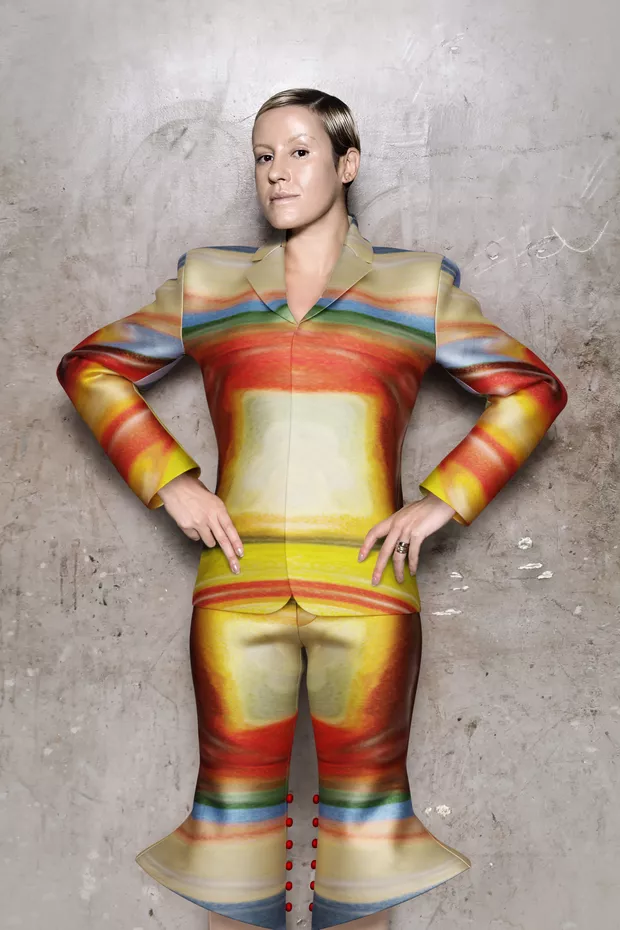
Pictured: Olivia Merquior. Blazer and shorts Lucas Leão + Lucca Marques (photo: Rogger Cordeiro)
What if Brazilian fashion were treated not merely as an industry, but as a matter of state policy? That is exactly what the newly founded Conselho Brasileiro de Moda — the Brazilian Fashion Council — sets out to do. Chaired by journalist Olivia Merquior, the council aims to make fashion a state policy under Brazil's Ministry of Culture, alongside cinema, theatre, music and historic heritage.
The institutions dedicated to fashion in Brazil today focus on the industrial and economic side: textile producers, garment manufacturing, retail. That matters enormously — this is where jobs are created, income is generated and the economy keeps moving. But here we are talking about fashion as product: as merchandise, consumption, trend. It is just as important to think of fashion as an expression of Brazilian culture. From that point on, we are talking about fashion as heritage, as history, as memory and as recognition.
Brazil has the fifth-largest textile industry in the world. We are the planet's leading cotton exporter. And our silk thread, largely produced in the state of Paraná, is the finest in the world. Around 90 per cent of that silk is exported, and 95 per cent of it is graded first quality — and our main client is none other than Hermès Paris.
And yet we, as Brazilian citizens — who already recognise our music as heritage, for instance, and who are only now beginning to recognise the power of our national cinema — have still not grasped how much the fashion industry, and fashion as cultural expression, could do for our country.
Fashion councils like the one just founded here in Brazil have been firmly established for decades in countries such as France, Italy, the United States and England. These are not only the countries that host the world's four biggest fashion weeks; their fashion capitals are also home to the largest and most important fashion museums.
Imagine if we could have a museum of Brazilian fashion. One that could speak to our many aesthetics and the mix that emerged between them; that could tell the story of our designers, past and present; that could showcase our craftsmanship — the many kinds of lace, crochet and straw work made in every corner of the country.
If cinema is the seventh art, fashion is, without a shadow of a doubt, the eighth. Yet of all the arts, it is the one that has remained most confined to a purely commercial view. That is why the Brazilian Fashion Council was born: to bring a vision of fashion that goes beyond clothing. Fashion as a cultural trait of our country — one that, beyond generating jobs and income and driving our economy, can also become an extraordinarily powerful form of soft power, just as it is in France.
Maria Landeiro is a fashion journalist based in Salvador, Bahia, and a contributor to Gingada.
Related on Gingada
Keep reading
Business · 23 September 2026
WHY GLOBAL FASHION AND BEAUTY BRANDS SHOULD BE CALLING BRAZIL
Every brand looking for its next growth market is running the same checklist: which country is culturally ascendant, and which country's consumers will actually stay once the launch campaign ends? Right now, both answers point to the same place.
Business · 24 September 2026
TEXBRASIL: THE MACHINE BEHIND BRAZIL'S FASHION EXPORTS
Every Brazilian label that has shown in Milan, opened a corner at Macy's or landed a rack at Selfridges has, more likely than not, gone through the same 26-year-old program most of the industry has never heard of.
Beauty market · 23 September 2026
BRAZIL IS THE WORLD’S SECOND-LARGEST FRAGRANCE MARKET
Right behind the United States — and it isn’t luxury spending driving it. It’s a daily habit. Brazilians reapply perfume the way other countries reapply lip balm.