
WHY GLOBAL FASHION AND BEAUTY BRANDS SHOULD BE CALLING BRAZIL
Every brand looking for its next growth market is running the same checklist: which country is culturally ascendant, and which country's consumers will actually stay once the launch campaign ends? Right now, both answers point to the same place.
Gingada · · 5 min read
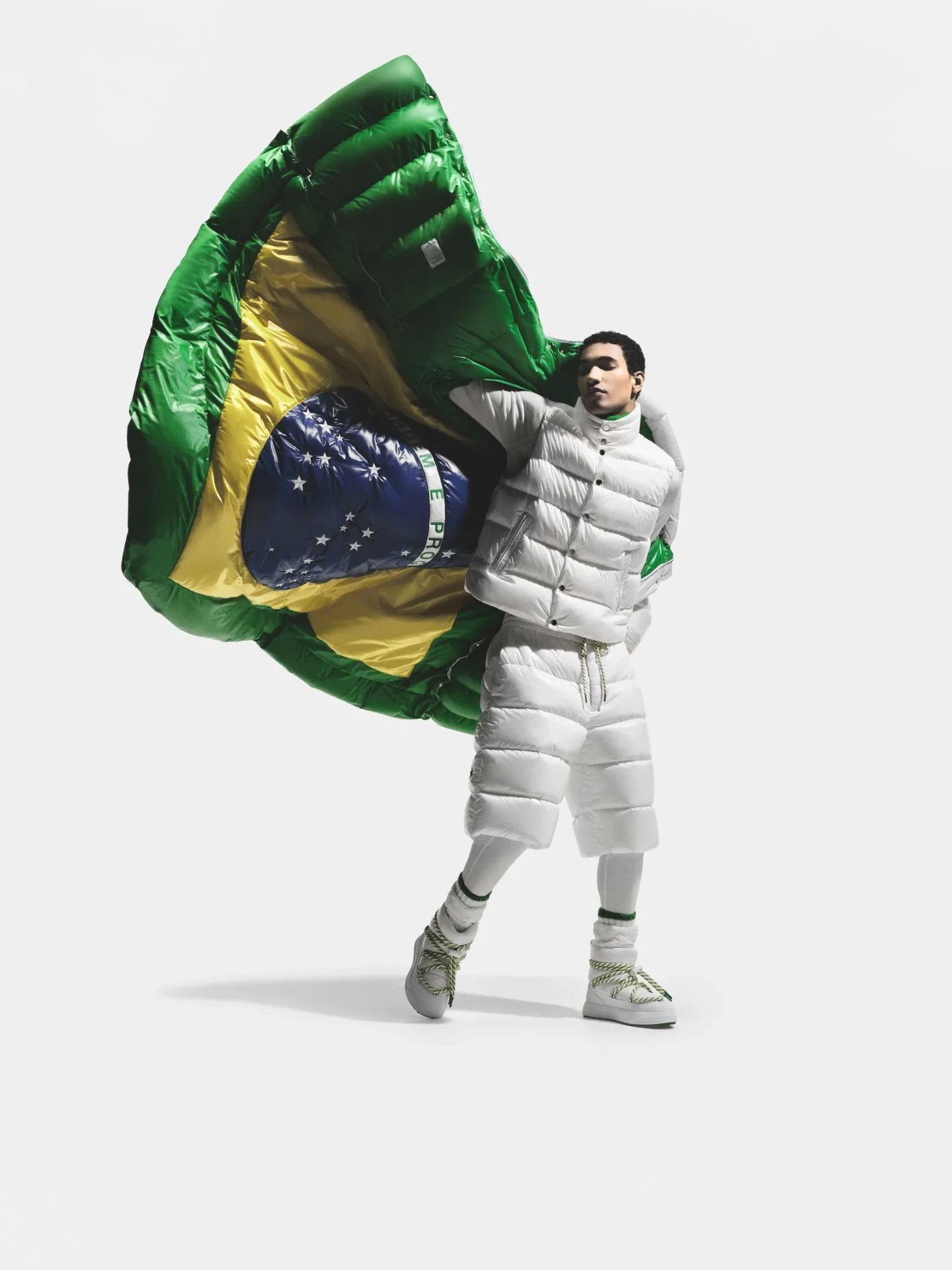
Image credit: Moncler
Brazilians will carry your brand for you, organically, if you earn it.
Here's a pitch every global brand strategist should be writing into next year's plan: if you're deciding who to partner with for your next collaboration, capsule or market entry, Brazil should be at the top of the shortlist — not as a nostalgia play, and not as an "emerging market" line item, but because the two conditions that make any partnership actually pay off are both true here, right now, at the same time.
Reason one: the world is already looking
This isn't a hunch. On September 13, 2026, the Associated Press ran a story with a headline that says the quiet part out loud: "Brazil is in fashion, as Brazilians like to say." Record numbers of tourists are arriving in green, yellow and blue. Brazilian films are picking up Oscar nominations. Funk is crossing into global pop culture. Major fashion brands and influencers, in the AP's own words, are "leaning into the hype." This is happening in the same month Havaianas launched a global capsule with Brooklyn's KidSuper built entirely around Brazilian football culture — the timing isn't a coincidence, it's brands reading the room correctly.
Here's the part worth being honest about: Brazilians themselves describe this as a cyclical thing — "Brasil está na moda" is a phrase they've reached for before, not a first-time discovery. That's not a reason to hesitate. It's the opposite. A cultural wave that recurs is a wave you can actually plan around, if you're the brand that shows up during it rather than after it peaks. The industry names that partnered with Melissa and Havaianas decades before either brand was globally famous didn't wait for a trend piece to tell them Brazil was interesting. They got there first, and they're the names Brazilian consumers still remember.
Reason two: the audience you'd be buying isn't rented, it's earned
Attention is cheap and everywhere right now. What's genuinely scarce is an audience that sticks around and does your marketing for you after the campaign budget runs out — and that's the specific thing the Brazilian market offers that a lot of "trending" markets don't.
Brazil has roughly 148 million WhatsApp users, the second-highest total anywhere in the world behind India, and around 130 million TikTok users, the third-largest audience on that platform globally. More telling than the size of those numbers is the shape of the behavior behind them: across the board, Brazilian marketing data shows community participation consistently outperforming traditional brand broadcasting, with local creators regularly out-converting global celebrities on engagement. That's a market that doesn't just watch a campaign — it talks about it, shares it, and folds it into daily conversation on the platform it already lives on ten-plus hours a week.
The honest caveat: this isn't unconditional love. Brazilian consumers are also famously price-sensitive, and loyalty here has to be earned continuously, not assumed after one good launch. But that's arguably the better trade for a serious long-term partner — an audience that holds you accountable is worth more than one that simply doesn't pay attention.
Put those two things together and the math changes
A partnership with a Brazilian brand right now doesn't just borrow a moment of cultural relevance — it borrows an audience built to carry that relevance further than a single campaign cycle, on channels that were built for word-of-mouth at scale. That's a genuinely rare combination. Plenty of countries are having a cultural moment. Plenty of markets have highly engaged consumers. Very few have both running at full strength simultaneously, and even fewer have a fashion export history — Melissa, Havaianas, Farm Rio, PatBO — that already proves those consumers, and their designers, know exactly how to hold up their end of a collaboration.
The brands that partnered with Brazil early didn't get lucky. They read the same two facts we just laid out, years before most of the industry noticed either one. The invitation is still open. It just gets more expensive the longer it takes to say yes.
Companion reading
- Gingada, "The Collab Code: How Melissa, Havaianas and Farm Rio Partnered Their Way Onto the Global Stage"
- AP News, "Brazil is in fashion, as Brazilians like to say. Here's why," September 2026
- Everything-PR, "The Brazil Marketing Playbook: 6 Strategies That Work and the Brands That Prove It," June 2026
- GWI, "Brazilian Consumers: Market Insights for Buying and Social Media"
Keep reading
Business · 23 September 2026
THE PRACTICAL GUIDE: HOW TO PARTNER WITH BRAZILIAN FASHION AND BEAUTY BRANDS
Whether you're a buyer scouting new suppliers, a brand scouting a collaborator, or a Brazilian label scouting your own way into the UK and Europe — here's the actual infrastructure that makes it happen: who runs it, what it does, and where you'll find it in person.
Business · 24 September 2026
TEXBRASIL: THE MACHINE BEHIND BRAZIL'S FASHION EXPORTS
Every Brazilian label that has shown in Milan, opened a corner at Macy's or landed a rack at Selfridges has, more likely than not, gone through the same 26-year-old program most of the industry has never heard of.
Opinion · 24 September 2026
THE EIGHTH ART: WHY BRAZILIAN FASHION DESERVES TO BE STATE POLICY
Brazil grows the world's most exported cotton and spins the silk Hermès depends on, yet its fashion is still treated as commerce alone. The newly founded Brazilian Fashion Council wants to change that.