
THE FINE PRINT: WHAT THE EU–MERCOSUR DEAL ACTUALLY MEANS FOR BRAZILIAN FASHION
Twenty-five years of negotiation. One signature. And a tariff clock that's already ticking. Here's what changes — and what still doesn't — for the brands, factories and artisans behind Brazilian fashion made in the territory.
Renata Drews for Gingada · · 9 min read
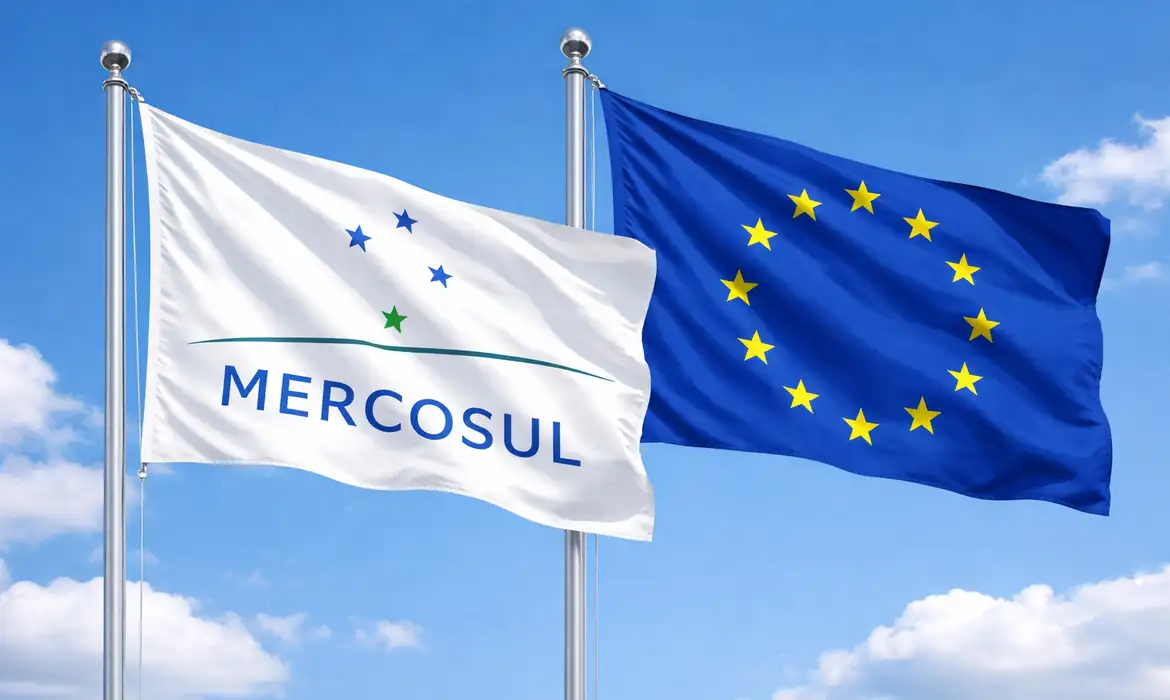
Photo: Agência Brasil
Somewhere between a container port in Santos and a shoe rack in a Lisbon department store, a pair of Brazilian sandals just got a little cheaper to sell.
That's the least glamorous possible way to describe a trade deal twenty-five years in the making, but it's the truest one. On January 9, 2026, the Council of the European Union greenlit the signature of the EU–Mercosur Comprehensive Partnership and Trade Agreement — the deal binding the EU to Brazil, Argentina, Paraguay and Uruguay, and quietly, the deal that will reshape how Brazilian fashion, leather and footwear reach European racks for the next decade. By May 1, the trade portions had already entered provisional application. No parades, no headlines in Vogue. Just a slow, structural shift in who gets to sell what, to whom, at what cost.
If you make, source, buy or write about Brazilian fashion, this is the story sitting underneath almost every other one. So let's get into the fine print.
WHAT ACTUALLY HAPPENED
Negotiations between the EU and Mercosur date back to 1999. An "agreement in principle" was struck in December 2024, and just over a year later, the European Council authorised signature of the full package — a Partnership Agreement covering political cooperation and sustainable development, plus an Interim Trade Agreement that could move faster, ahead of the years-long ratification process the wider deal still needs.
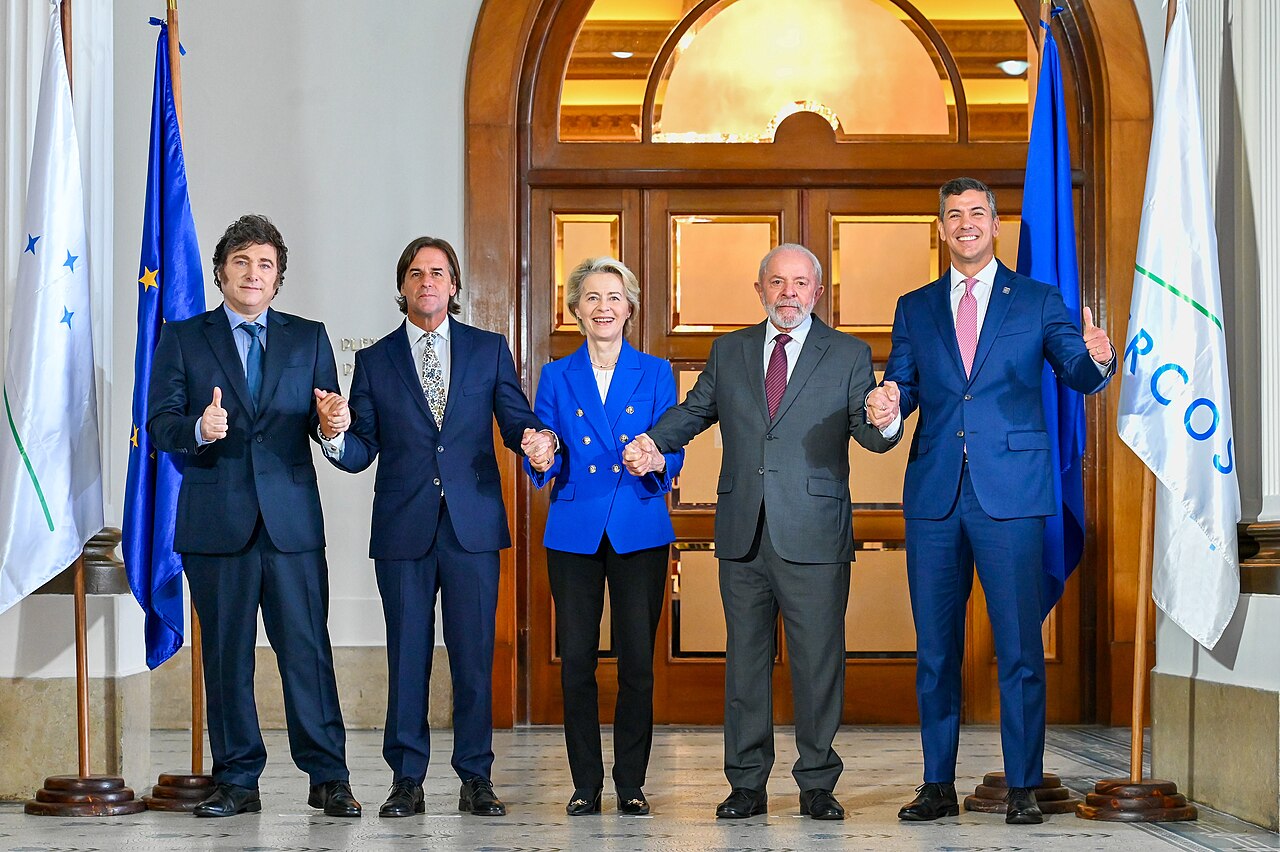
That's the detail worth sitting with: the trade agreement is running ahead of the political one. While the full Partnership Agreement waits on consent from the European Parliament and ratification by all 27 EU member states — a process that could stretch on for years — the Interim Trade Agreement has already started applying provisionally. Tariff clocks are running on goods that haven't waited for Brussels' full paperwork to clear.
Combined, the EU and Mercosur create a market of roughly 700 million consumers — by some measures, the largest free trade zone on record. For a country whose fashion industry has spent decades being reduced to Rio, resort wear and rainforest imagery, that's not a small door to walk through.
THE NUMBERS THAT MATTER TO A DESIGNER, NOT JUST AN ECONOMIST
Two sectors got specific, quantifiable wins.
Textiles: the European Commission itself has flagged textile tariff reductions as one of the deal's "most important wins" for its own side — which tells you Brazilian textile exporters are sitting on the other end of a genuinely favourable trade. That's not a minor detail. Brazil grows some of the finest cotton on the planet — the kind that ends up, uncredited, in supply chains most consumers assume start and end in Europe. A tariff cut doesn't just move products. It moves who gets named in the story of where luxury actually comes from.
Footwear: this is where the deal gets legible in real numbers. Current EU duties on Mercosur footwear sit between 3.5% and 17%, and under the agreement they'll phase down to zero over roughly a decade. Brazil exported 17.4 million pairs of shoes to Europe in 2025 — a market that already takes 40% of the world's shoe imports. Haroldo Ferreira, president of Abicalçados (the Brazilian Footwear Industries Association), called it a deal that "creates opportunities for competitive gains against international competitors, primarily in Asia" — with one important asterisk: rules of origin require at least 60% regional content on lower-value shoes, specifically to stop non-Mercosur manufacturers routing goods through Brazil, Argentina, Paraguay or Uruguay to dodge tariffs elsewhere.
Read between those numbers and there's a sharper story: this is Havaianas' and Melissa's home turf. The country that invented the rubber flip-flop and the original jelly shoe is now getting a decade-long tariff runway into the market that buys more shoes than anywhere else on Earth. That's not a footnote. That's the plot.
THE PART NOBODY'S CELEBRATING YET
Here's the honest caveat: this deal is signed, not sealed. The European Parliament still has to give consent. All 27 EU member states still have to ratify the wider Partnership Agreement. France, in particular, has spent years signalling discomfort over the deal's agricultural provisions — a fight that has nothing to do with fashion and everything to do with whether the whole package clears in a timeframe anyone can plan a collection around.
So what's actually live right now, in September 2026, is the interim, provisional version — tariff movement without full political sign-off. It's real, it's already benefiting exporters, and it could also, in theory, hit turbulence before it's finished. If you're a Brazilian brand modelling your five-year European expansion plan, that uncertainty is a line item, not a footnote.
THE RULE THAT DECIDES WHO ACTUALLY BENEFITS
That 60% regional content threshold is worth unpacking, because it's the difference between a policy win on paper and one that actually reaches a Brazilian workshop. Rules of origin exist to stop a shoe assembled cheaply outside Mercosur from getting relabelled and shipped through Santos or Buenos Aires just to pick up the tariff discount on the way into Europe. In practice, that means the leather, the rubber, the textile uppers — the actual material story of the product — has to be traceable back to the region for the tariff cut to apply.
That's a gift disguised as customs paperwork. The EU is effectively legislating that it wants to know where things are really made before it rewards them. Brazilian manufacturers who can document their supply chain — who can say, credibly, this leather was tanned here, this cotton was grown there — are the ones positioned to actually capture the tariff relief, not just watch it pass through on someone else's paperwork. Traceability stops being a marketing nice-to-have and starts being the thing standing between a factory and a lower bill at the EU border.
Beauty and cosmetics sit in a slightly different lane — tariffs matter less there than regulatory alignment, since EU cosmetics rules on ingredient safety, labelling and testing are notoriously strict. ABIHPEC's Beautycare Brazil companies have spent years building compliance credibility at Cosmoprof Bologna and on the in-cosmetics circuit precisely because a tariff cut means nothing if the product can't legally sit on a European shelf in the first place. If the fashion side of this deal is a story about cost, the beauty side is still, stubbornly, a story about trust.
MEANWHILE, ACROSS THE CHANNEL: THE UK IS NOT INVITED
Here's the twist: most coverage of this deal skips entirely, and it matters for UK buyers, British-Brazilian creatives, or anyone weighing London against Paris as a launch market: none of this applies to the United Kingdom.
Brexit means the UK sits outside whatever tariff relief the EU–Mercosur deal delivers. Brazil is now separately seeking a Mercosur–UK trade agreement modelled on the EU one, and in March 2026 the UK Trade Policy Observatory published an analysis framing a Mercosur deal as "an attractive opportunity for the UK" — the kind of language that signals interest, not commitment. Nothing has been signed.
What has landed is the UK–Brazil Strategic Partnership 2026–2030, announced this year, mobilising up to £5.4 billion in UK government-backed trade and investment guarantees across five pillars — political dialogue, trade and investment, security, sustainable development, and people-to-people ties, including a dedicated Brazil–UK Year of Culture 2026. Read the fine print, though, and the named priority sectors are infrastructure, health, digital, bioeconomy and energy. Fashion, beauty, textiles and design don't appear by name once.
That's not a minor omission — it's a gap with a shape. The UK just committed £5.4 billion and a full year of cultural programming to its relationship with Brazil, and somehow didn't write fashion into it. For a country whose creative economy the British Council has been actively researching for over a decade, that's a door left ajar.
THE DEAL DOESN'T BUILD THE BRIDGE — IT JUST MAKES IT CHEAPER TO CROSS
It's worth being precise about what a trade agreement does and doesn't do. Tariffs are one variable in a much longer equation: a Brazilian brand still needs to be found by a European buyer, styled into a European story, and trusted by a European customer before a tariff cut means anything at all.
That work has, in fact, already been underway for years, largely outside the spotlight this trade deal is now getting. Texbrasil — the internationalisation programme jointly run by Apex-Brasil and the Brazilian Textile and Apparel Industry Association (ABIT) since 2000 — has spent two decades flying buyers from Net-a-Porter, Selfridges, Galeries Lafayette and El Corte Inglés into Brazil, and flying journalists from Vogue, Harper's Bazaar and The Guardian in behind them. ABIT showed up alongside Brazilian cotton growers' association Abrapa at Première Vision Paris earlier this year — the exact trade-fair floor where "best cotton in the world" stops being a talking point and becomes a buyer's line item. Fashion Label Brasil has been running showrooms in Paris. On the beauty side, ABIHPEC's Beautycare Brazil programme — running since 2001 — logged US$363.4 million in exports from its member companies in 2025 alone, built on a presence at Cosmoprof Bologna and the in-cosmetics circuit.
None of that infrastructure needed the EU–Mercosur deal to exist. What the deal does is make everything that infrastructure has been building measurably more profitable, right as it's already in motion. It's less a starting gun and more a tailwind — arriving at a moment when Brazilian fashion, beauty and craft exporters were already mid-sprint.
WHAT THE TARIFF SCHEDULE ACTUALLY RECLASSIFIED
The silk nobody credits to the south of Brazil, the cotton nobody traces past a European mill, the rubber sandal and the jelly shoe both invented here and still filed under "novelty" instead of "innovation" — those are exactly the categories a tariff schedule just quietly reclassified as strategically important enough to negotiate over for twenty-five years.
A trade deal won't rewrite a stereotype on its own. Tariffs don't do storytelling. But they do something almost as useful: they put a number next to the claim. When the EU calls textile tariff cuts one of its biggest wins from a deal with Mercosur, that's not an industry talking point — that's Brussels saying it, in a legal document, with a decade-long phase-out schedule attached.
The job left on the table — the one no ministry, chamber or trade body is going to do — is telling people what's actually inside that shipment: whose hands made it, what region it's from, why the flip-flop mattered before the tariff did.
That's the fine print worth reading past.
Sources & further reading
- Council of the European Union, decision authorising the signature of the EU–Mercosur Partnership Agreement, 9 January 2026.
- European Commission, on textile tariff reductions as a key EU gain in the EU–Mercosur agreement.
- Abicalçados, statement by president Haroldo Ferreira on the EU–Mercosur agreement; Brazilian footwear exports to Europe, 17.4 million pairs, 2025.
- UK Trade Policy Observatory, analysis of a prospective Mercosur–UK trade agreement, March 2026.
- UK–Brazil Strategic Partnership 2026–2030, including the Brazil–UK Year of Culture 2026.
- Texbrasil (Apex-Brasil / ABIT) and ABIHPEC's Beautycare Brazil programme — export performance and trade-fair presence.
- Follow the tariff clock live: Gingada's EU–Mercosur tariff tracker
Keep reading
Business · 24 September 2026
TEXBRASIL: THE MACHINE BEHIND BRAZIL'S FASHION EXPORTS
Every Brazilian label that has shown in Milan, opened a corner at Macy's or landed a rack at Selfridges has, more likely than not, gone through the same 26-year-old program most of the industry has never heard of.
Opinion · 24 September 2026
THE EIGHTH ART: WHY BRAZILIAN FASHION DESERVES TO BE STATE POLICY
Brazil grows the world's most exported cotton and spins the silk Hermès depends on, yet its fashion is still treated as commerce alone. The newly founded Brazilian Fashion Council wants to change that.
Business · 23 September 2026
WHY GLOBAL FASHION AND BEAUTY BRANDS SHOULD BE CALLING BRAZIL
Every brand looking for its next growth market is running the same checklist: which country is culturally ascendant, and which country's consumers will actually stay once the launch campaign ends? Right now, both answers point to the same place.