
BRAZILIAN LACES: A MAP OF BRAZIL'S REGIONAL EMBROIDERY HERITAGE
At the Paris 2024 Olympics, some of Team Brazil's kit carried embroidery hand-stitched in a small town in the interior of Rio Grande do Norte. It's one thread in a much larger, largely uncredited map: at least half a dozen named, centuries-old lace and embroidery traditions, each specific to a Brazilian state, several to a specific town — legally recognized as heritage, still made by hand, and almost never mentioned when the world talks about "Brazilian craft." Here's the atlas.
Renata Drews for Gingada · · 7 min read
Ask most people outside Brazil to name a Brazilian textile tradition and you'll get silence, or a guess about carnival feathers. Ask inside the country and the answer depends entirely on which coastline or backland you're standing in — because Brazil doesn't have one lace tradition. It has a scattered, regionally distinct set of them, each with its own name, its own town of origin, and its own five-hundred-year story of how a European convent stitch or a fisherman's net ended up as protected cultural heritage in the Brazilian Northeast and South. None of them travel under a single brand name. All of them predate the idea that Brazilian fashion needed one.
Here's a tour of six, region by region.
RENDA RENASCENÇA — MONTEIRO AND THE CARIRI BACKLANDS, PARAÍBA
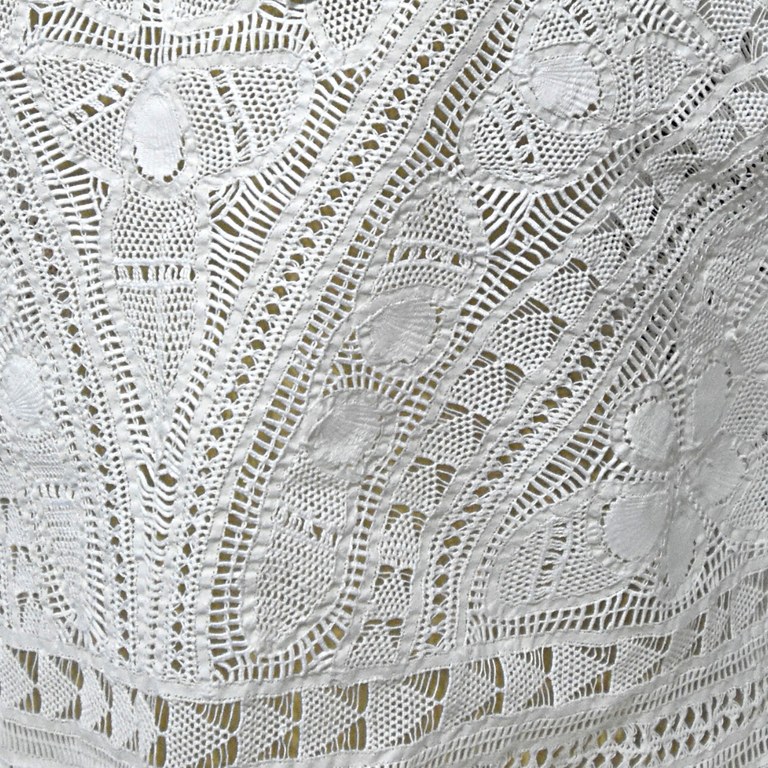
The most internationally storied of Brazil's lace traditions traces back to sixteenth-century Venice — specifically the island of Burano, long famous for needle lace — and reached Brazil through Carmelite nuns who settled in Olinda, Pernambuco, and taught the stitch in convents. From there it migrated inland and, from the 1950s, took deep root among women in the semi-arid Cariri backlands of Paraíba — specifically the towns of Monteiro, Camalaú, São João do Tigre, São Sebastião do Umbuzeiro and Zabelê, all once districts of Monteiro itself.
The technique — stitching a fine ribbon called lacê onto a paper pattern pinned to a cushion, then interlacing it with threads in stitches locally named "double knot," "popcorn" and "pineapple" — produces lace strong enough, artisans say, to survive repeated washing without losing its shape. Around 3,000 artisans now work the craft across the five towns, organized collectively through a cooperative called Conarenda. Monteiro was named a World Crafts City for Renda Renascença by the World Crafts Council in 2022, and Renda Renascença became Paraíba's official intangible cultural heritage by state law in December 2021 — recognition of, as the legislation put it, a craft that stands for "resilience and regional identity" in one of Brazil's driest, poorest regions.
BORDADO DO SERIDÓ — CAICÓ AND TWELVE TOWNS OF INLAND RIO GRANDE DO NORTE
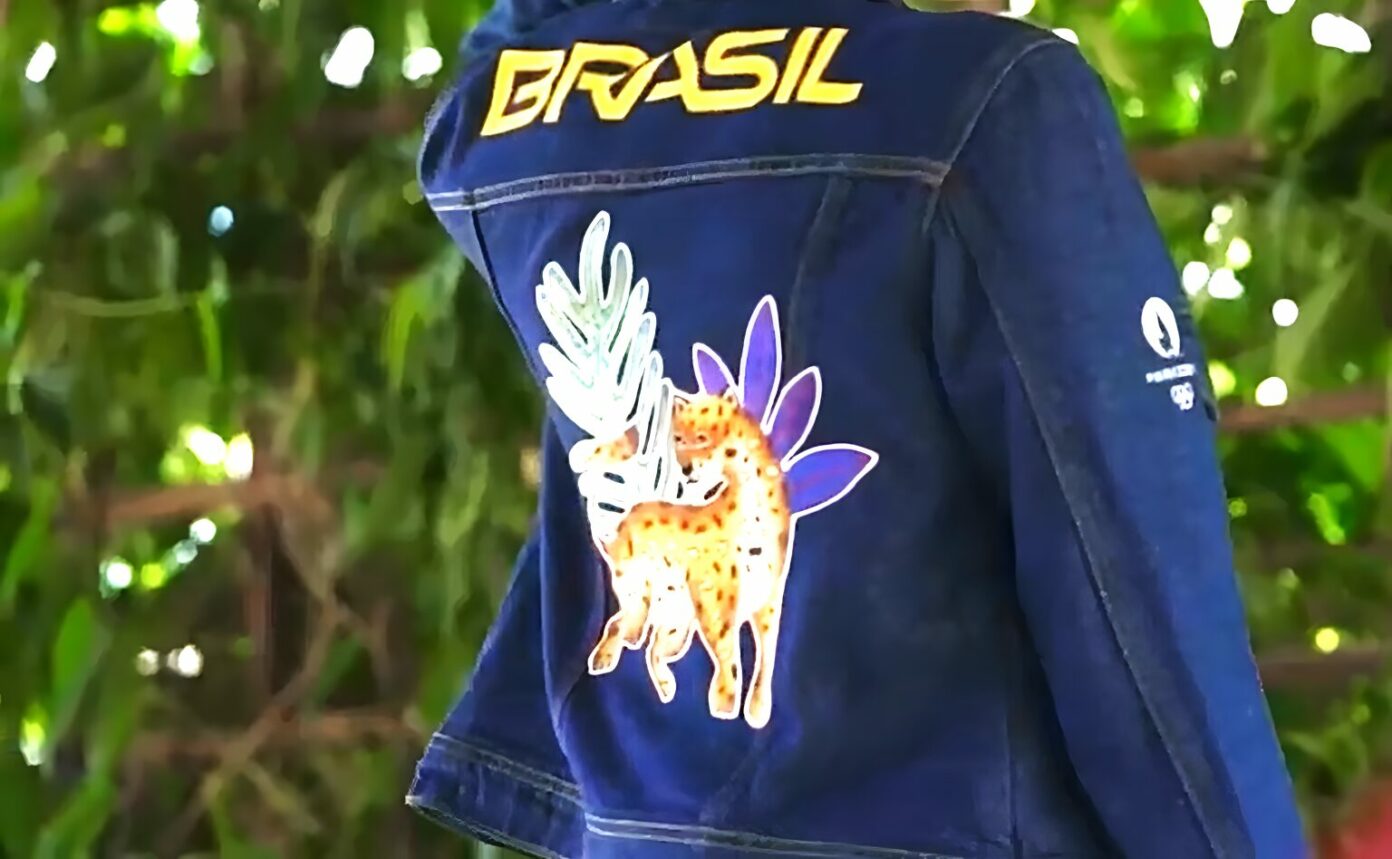
Portuguese in technique, entirely Brazilian in reach, the embroidery of the Seridó Potiguar region — centered on the town of Caicó — was granted a Geographic Indication by Brazil's National Institute of Industrial Property in 2020, covering twelve municipalities including Caicó and Timbaúba dos Batistas, and became Rio Grande do Norte's officially recognized intangible cultural heritage by state law in January 2025.
Its recent résumé is hard to beat: embroiderers from Timbaúba dos Batistas hand-stitched pieces used in Team Brazil's kit for the Paris 2024 Olympics, and in 2022, Brazil's First Lady Rosângela "Janja" da Silva wore a dress carrying the region's embroidery — two moments that put a centuries-old backlands craft directly on a global stage most of its own makers will never visit. The craft remains, as it has for generations, a genuine income source for the families of the Seridó — proof that "heritage" and "livelihood" aren't separate categories out here.
BORDADO LABIRINTO — SÃO MIGUEL DO GOSTOSO, RIO GRANDE DO NORTE
A short distance away on Rio Grande do Norte's northern coast, and entirely distinct from the Seridó tradition, sits a second, separately recognized embroidery: Bordado Labirinto, native to the Reduto community in São Miguel do Gostoso. Its name is literal — the technique of unraveling fabric threads, twisting them, filling in the gaps and outlining the result produces patterns that genuinely resemble a maze, worked with what local advocates call meticulous, symbol-laden handling. It was formally recognized as Rio Grande do Norte's intangible cultural heritage by state law in September 2024, a full four months ahead of the Seridó recognition — meaning one small Brazilian state now legally protects two unrelated, geographically distinct embroidery traditions within its own borders, a density of craft heritage most countries would build a museum wing around.
RENDA DE BILRO — AQUIRAZ, CEARÁ
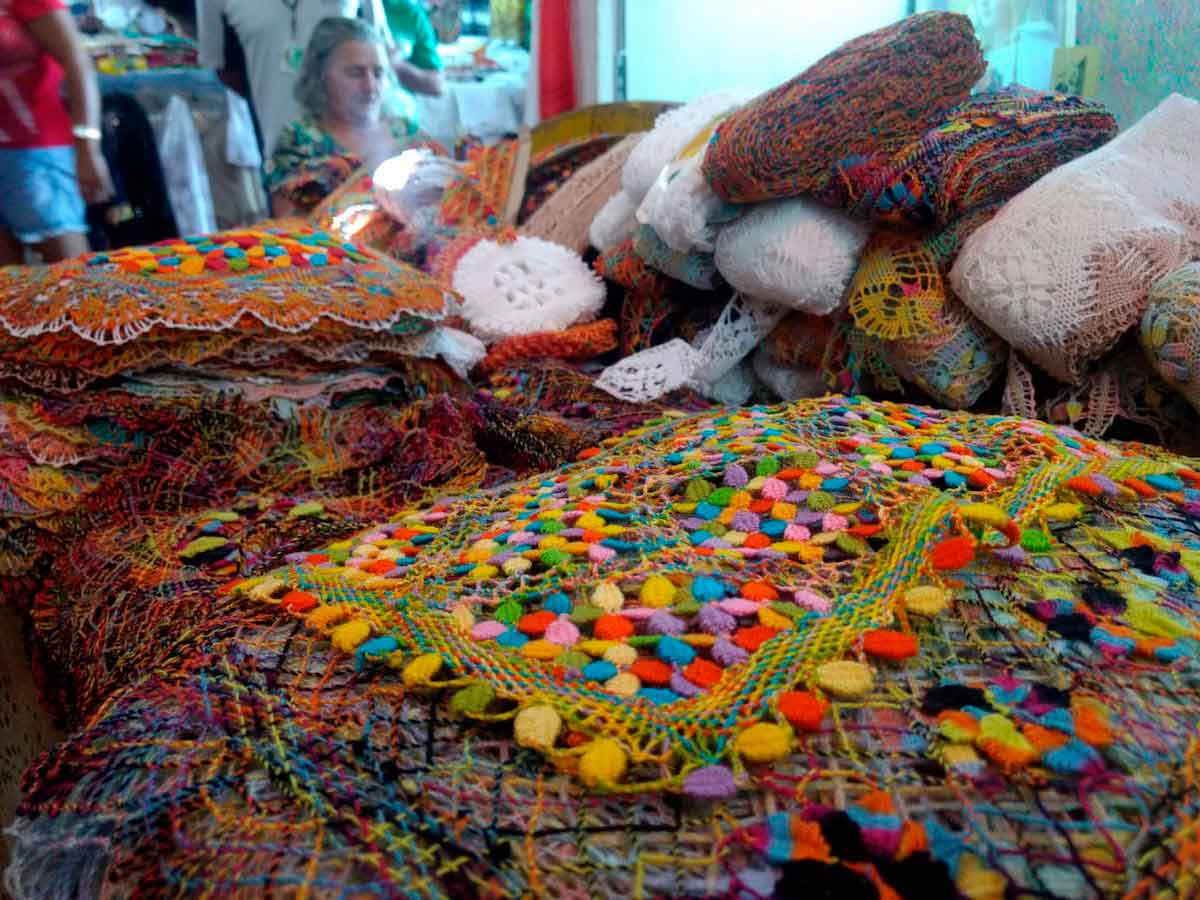
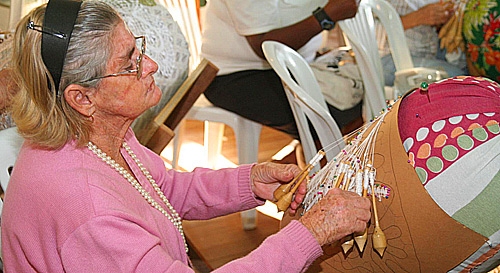
Bobbin lace — worked by weaving thread around small wooden bobbins, traditionally with a mandacaru cactus spine and a banana-leaf-padded cushion doing the job of pins and pillow — arrived in Ceará from Vila do Conde, Portugal, and took hold in the coastal town of Aquiraz, just outside Fortaleza. The tradition's proof of scale is almost absurd: between January 2006 and 2013, forty local women, aged 20 to 65, spent their spare time hand-making a single continuous piece of bilro lace measuring 1.13 kilometers — long enough to earn a national record, now on permanent display at the Complexo Artesanal de Aquiraz.
"I learned to make lace from my mother, and she from my grandmother," one of the rendeiras said of the project. "It's tradition, but nowadays it's difficult for young people to want to learn." Aquiraz's renda de bilro has since received its own Geographic Indication, and the state maintains a formal cultural partnership with its Portuguese sister craft as a shared, cross-Atlantic heritage.
RENDA DE FILÉ — JAGUARIBE, CEARÁ
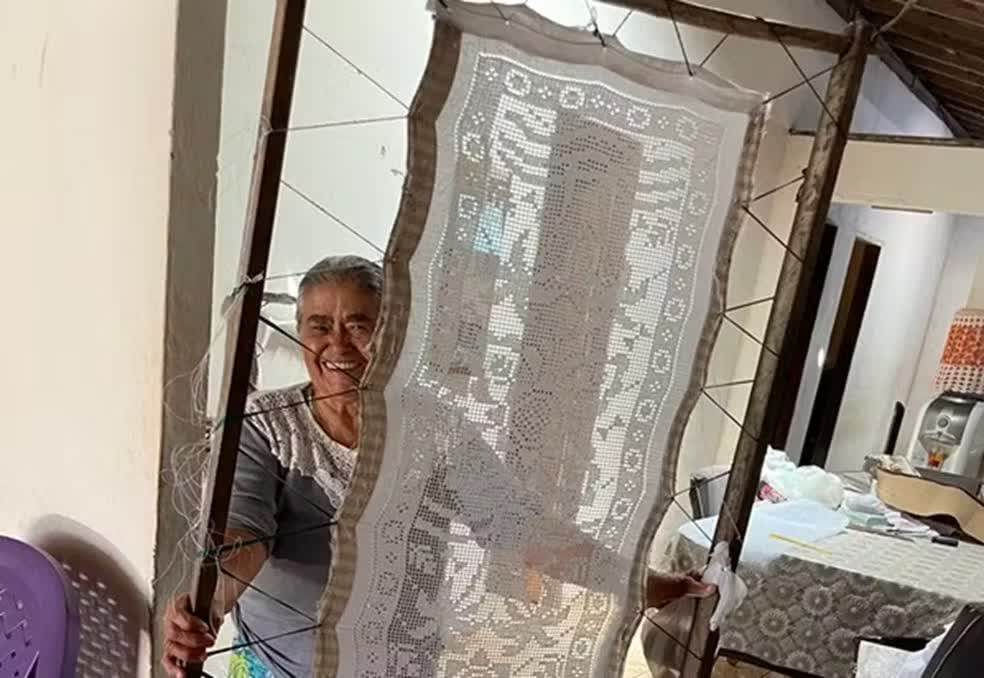
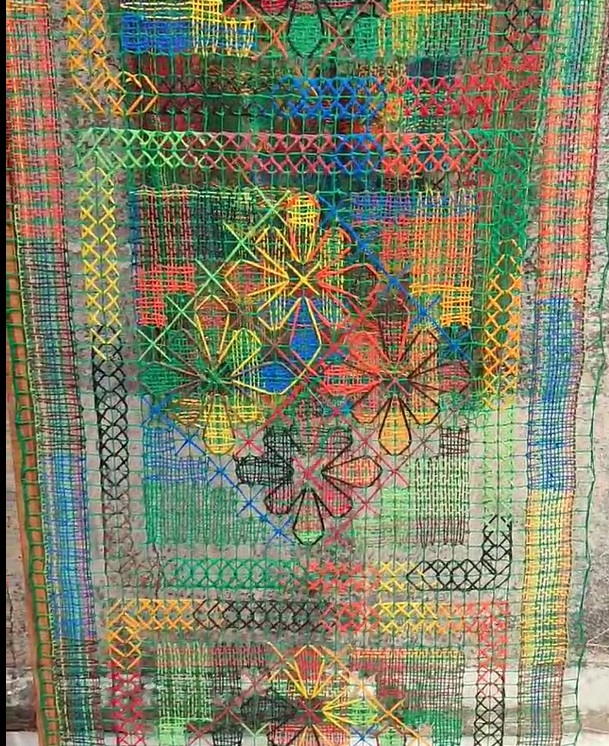
A different lace altogether — filé, from the French filet, meaning net — is embroidery worked over a knotted mesh rather than bobbin-plaited thread, and traces back to Portugal's Minho region and Italy's Pistoia before arriving in colonial Brazil. In the town of Jaguaribe, Ceará, it evolved directly out of fishing-net making: families still gather at home storefronts to produce it collectively, using stitches with names as specific as the towns that keep them — cerzido, palhetão, ponto 8, espinha de peixe, rosa pião. Jaguaribe earned its own Geographic Indication in November 2024, Ceará's fifth, and the town has marked March 19 as an official municipal "Renda Filé Day" since 2022 — a lace so central to local identity that its own city government gave it a holiday.
RENDA DE FILÉ — THE COAST OF ALAGOAS
The same net-based technique appears again, independently claimed and recognized, along the coast of Alagoas — where the originating story is even more literal: fishermen's wives embroidered directly onto the nets their husbands had just made, adding the region's characteristic bright colors to a purely functional object. The result became so woven into Alagoan identity that it's now recognized as the state's own intangible cultural heritage, appearing not just on textiles sold to tourists but worked into the region's maracatu festival costumes and folklore — a lace born, quite literally, from where there are nets.
RENDA DE BILRO — THE ISLAND OF SANTA CATARINA
Brazil's lace map isn't only a Northeastern story. On the island of Santa Catarina — modern Florianópolis — bobbin lace arrived with roughly 6,000 Azorean settlers sent by Portuguese authorities beginning in 1748, carrying a technique that had itself reached the Azores from fifteenth-century Italy, France and Portugal. It took root in the island's traditional fishing neighborhoods — Lagoa da Conceição, Pântano do Sul, Ponta das Canas, Sambaqui, Rio Vermelho — where men fished with nets and women made lace to supplement the household budget, a partnership captured in a local saying that needs no translation: onde há rede, há renda — where there are nets, there is lace. Mid-twentieth-century tourism and service-sector jobs pulled a generation of island women away from the craft, but it has found a second life among retirees rediscovering it as both pastime and income, supported by cultural centers like the Casa das Rendeiras in Pântano do Sul.
A MAP, NOT A MOOD BOARD
Put these six side by side and a pattern breaks, not confirms: there is no single "Brazilian lace." There is a Venetian needle-lace stitch that found a second home in the Paraíban backlands; a Portuguese embroidery style now legally tied to twelve towns around Caicó and recently dressed an Olympic kit; a wholly separate maze-pattern embroidery from a fishing village up the same state's coast; a Portuguese bobbin lace that took root in Ceará strongly enough to produce a kilometer-long world record, and an ocean away, the same bobbin technique planted by Azorean settlers on a southern Brazilian island with its own name for the same craft. Each one is protected by its own law, tied to its own town, carried by artisans who can usually name the grandmother who taught them.
That specificity is precisely what gets flattened every time Brazilian craft gets summarized in a single adjective — "exotic," "tropical," "artisanal" — instead of a place name. Renda Renascença isn't generically Brazilian; it's Monteiro's. Bordado do Seridó isn't a vague Northeastern flourish; it's Caicó's, and it was good enough for an Olympic uniform. The story was never the country as a mood board. It was always the map: which town, which stitch, which grandmother.
Sources & further reading
- Paraíba Criativa, "Renda Renascença".
- O Poder, "Renda Renascença é patrimônio da Paraíba".
- Tribuna do Norte, "Bordado do Seridó é reconhecido como patrimônio imaterial do RN".
- Saiba Mais, "Bordado Labirinto é reconhecido como Patrimônio Cultural do RN".
- RankBrasil, "Maior Renda do Brasil".
- Governo do Ceará, "Maior renda do mundo é confeccionada em Aquiraz".
- Secretaria da Proteção Social do Ceará, on the Ceará–Portugal renda de bilro partnership.
- Agência Sebrae de Notícias Ceará, "Renda de Filé de Jaguaribe é a quinta certificação de Indicação Geográfica conquistada pelo Ceará".
- Ponto Solidário, "Renda de Filé".
- UFSC, "História de Florianópolis e da Renda de Bilro".
Read next
Keep reading
Culture · 24 September 2026
20 BRAZILIAN ICONS YOU NEED TO KNOW: BEYOND THE BRAZILCORE CLICHÉ
Forget the football shirt, Havaianas, and Rio de Janeiro. Here are 20 icons, objects, rituals, rebels and references that Brazilians live with, and that any brand hoping to sell to them, make with them or be inspired by them should know first.
People · 24 September 2026
FROM CAFUNÉ TO BOROGODÓ: THE WORDS THAT MADE BRAZILIAN PORTUGUESE
The grammar sailed in from Lisbon. The soul came from everywhere else. A guide to the everyday Brazilian words inherited from Indigenous, African and Arabic languages, what they really mean, and why Brazil sounds nothing like Portugal.
Craft · 23 September 2026
STITCHED DREAMS: THE WOMEN BEHIND PATBO'S EMBROIDERY
Every hand-beaded PatBO piece — including the ones worn by Beyoncé — starts at a free embroidery school in the interior of Minas Gerais, where designer Patrícia Bonaldi has trained more than 500 women since 2015. This is the craft story behind the celebrity headlines: the atelier, the techniques, and why Bonaldi calls handmade work "the foundation" of her business, not a marketing detail.