
FROM CAFUNÉ TO BOROGODÓ: THE WORDS THAT MADE BRAZILIAN PORTUGUESE
The grammar sailed in from Lisbon. The soul came from everywhere else. A guide to the everyday Brazilian words inherited from Indigenous, African and Arabic languages, what they really mean, and why Brazil sounds nothing like Portugal.
Renata Drews for Gingada · · 8 min read
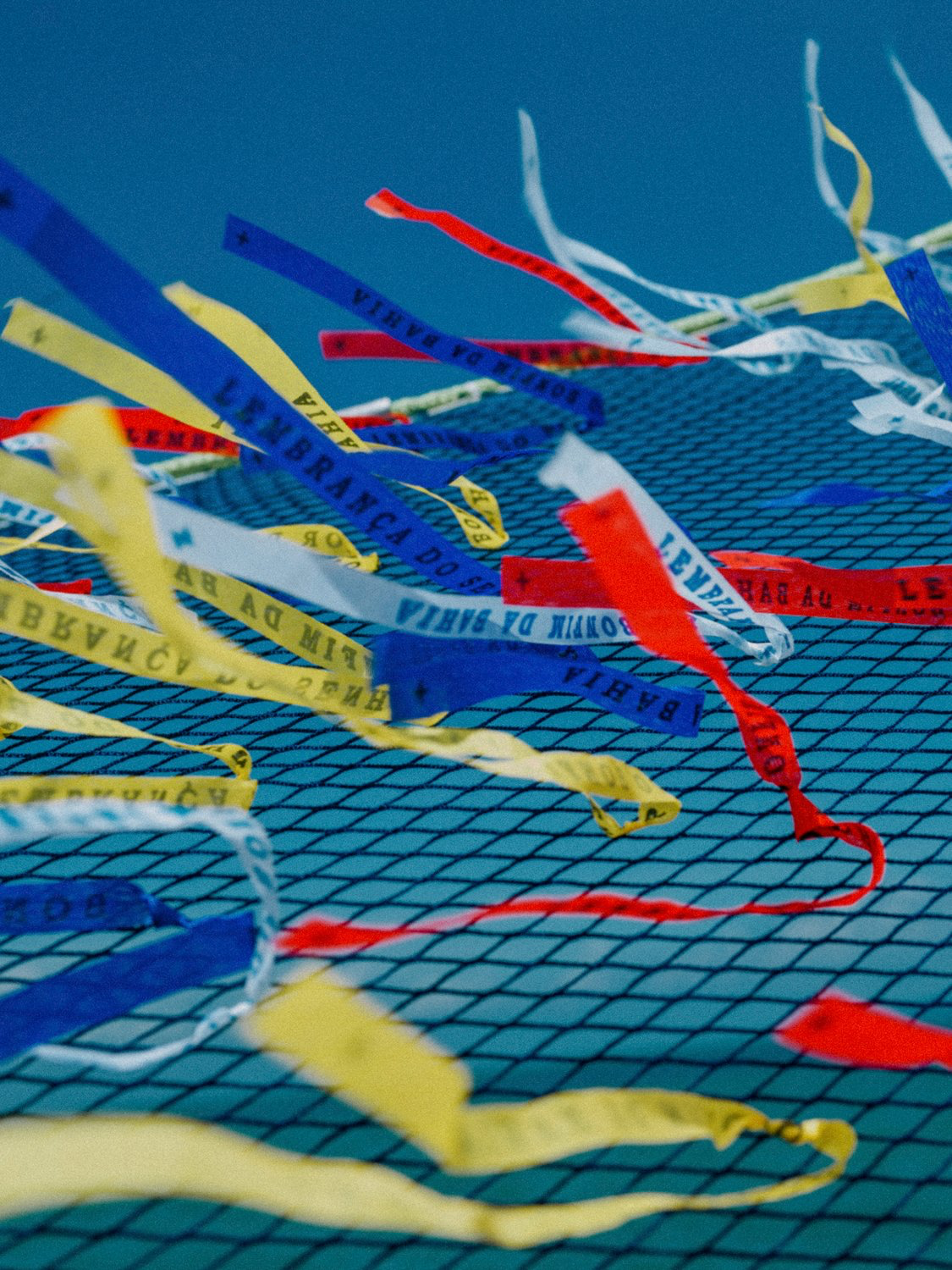
Listen to a Brazilian and a Portuguese person talk and you might think you're hearing two different languages. Brazilian Portuguese is slower, more open, more sung: vowels stretch, consonants soften, and the sentences sway. Linguists will point to centuries of separation. Brazilians will tell you it's the mixture.
Portugal gave Brazil its grammar. The rhythm and much of the everyday vocabulary came from the people who were already here and the people who were brought here: hundreds of Indigenous nations, millions of enslaved Africans, and later the waves of immigrants who landed on Brazil's shores. Brazilian Portuguese is a colcha de retalhos, a patchwork quilt, and every patch carries a history. Some of those histories are beautiful. Some are brutal. All of them are still spoken, every day, in kitchens, on beaches and in boardrooms.
If you do business with Brazil, you'll hear these words within your first week. Here's where they come from.
THE INDIGENOUS HERITAGE: TUPI AND GUARANI
When the Portuguese arrived in 1500, hundreds of Indigenous languages were spoken across the territory. The most widespread on the coast was Old Tupi. It was so dominant that for two centuries a Tupi-based língua geral (a "general language") was more widely spoken in parts of the colony than Portuguese itself. Its close relative, Guarani, shaped the South and Centre-West. Together they named almost everything the Europeans had never seen: the animals, the fruits, the rivers and the land itself.
Pipoca (popcorn): from Tupi pi'poka, "skin that bursts". It may be the most accurate food name ever coined.
Abacaxi (pineapple): from ibá (fruit) + cati (fragrant). The "fragrant fruit". Brazilians also use abacaxi as slang for a problem nobody wants to handle: "that project is an abacaxi."
Mandioca (cassava): from Tupi mani'oka. A popular legend links it to Mani, an Indigenous girl whose grave sprouted the root that would feed a continent.
Açaí: from Tupi ïwa'saí, usually translated as "the fruit that cries", a nod to the dark juice that drips as it's pressed. Since January 2026 it has also been Brazil's official national fruit.
Maracujá (passion fruit): commonly traced to mara'kuya, "food served in a gourd".
Capivara (capybara): from kapi'i (grass) + gwara (eater). The "grass-eater", now the internet's favourite chilled-out rodent.
Jacaré (caiman): from Tupi jakaré, popularly glossed as "the one who looks sideways". Anyone who has met one agrees.
Catapora (chickenpox): from tata'pora, "fire that leaps out of the skin".
Peteca: from pe'teka, "to strike with the palm". The feathered hand-shuttlecock is still a beach and schoolyard staple.
Cutucar (to poke, to nudge): from kutuk, "to pierce". Brazilians cutucam each other constantly, physically and on social media.
Xará (namesake): from Tupi, "my companion" or "the one with my name". Meet another Renata at a party and she's instantly your xará.
Guri (kid, boy): from Tupi-Guarani, and a signature word of Southern Brazil, where a guri and a guria are what the rest of the country calls a menino and a menina.
WORDS ON THE MAP
Carioca (a person from Rio de Janeiro): from Tupi kari'oka. The most repeated translation is "the white man's house", after the first Portuguese stone houses. Linguists still argue over it, and "house of the Carijó people" is one rival theory.
Ipanema: from 'y (water) + panema (bad, unlucky), so "bad water" or "a river with no fish". The irony: the name didn't start at the beach. The neighbourhood was named after the Baron of Ipanema, whose title came from a river in São Paulo state. So the world's most glamorous beach name is, literally, "worthless water".
Iguaçu: Guarani 'y (water) + guasu (big). The "big water", which is, if anything, an understatement for the falls on the Brazil–Argentina border.
Curitiba: from kurí'yt (pine) + yba (many). "The place of many pine trees", after the Paraná pine forests that still frame the city.
Pindorama: "the land of palm trees", often cited as the Tupi name for Brazil before 1500. Historians are more cautious about how widely it was used, but modernist artists and musicians embraced it as the country's mythical, pre-colonial name.
THE AFRICAN HERITAGE: BANTU LANGUAGES
Between the 16th and 19th centuries, around 4.8 million enslaved Africans were forcibly brought to Brazil, more than to any other country in the Americas. Brazil was also the last country in the Americas to abolish slavery, in 1888. The largest group came from Central and Southern Africa, the areas of today's Angola and Congo, speaking Bantu languages such as Kimbundu, Kikongo and Umbundu. Their words settled into the most intimate corners of Brazilian life: the family, the home, the body, the kitchen and the party.
Cafuné: from Kimbundu. It means gently running your fingers through someone's hair, and it's one of Brazil's most famous untranslatable words. No other language gave this gesture a noun. Brazilians did.
Caçula (the youngest child): from Kimbundu kasule, "the last-born". Every Brazilian family has one, and everybody knows who it is.
Moleque (kid, rascal): from Kimbundu mu'leke, "boy" or "son". In Brazil it became the word for a playful, mischievous kid, and, as an adjective, for anything cheeky and fun.
Cochilar (to nap): from Kimbundu koxila, "to doze". The after-lunch cochilo is practically a national institution.
Bagunça (a mess, chaos): often traced to Kimbundu vungunza, "to mix things up". Etymologists still debate it, but no Brazilian has ever needed a dictionary to recognise a bagunça.
Fubá (fine cornmeal): from Kimbundu fuba, "flour". It's the base of bolo de fubá, the cake of every Brazilian grandmother's afternoon coffee.
Quiabo (okra): from Kimbundu kingombo. It's the same African root as the English word gumbo, so Brazil and Louisiana share a vegetable and a word.
Dendê (palm oil): from Kimbundu ndende. The palm crossed the Atlantic with the people who knew how to use it, and its golden oil is the soul of Bahian cooking.
Samba: from semba, the umbigada, a circle dance in which partners invite each other in with a bump of the belly button. From that circle came Brazil's most famous export.
THE AFRICAN HERITAGE: YORUBA
Later in the slave trade, in the 18th and 19th centuries, large numbers of Yoruba-speaking people from West Africa (today's Nigeria and Benin) were brought especially to Bahia. They carried Candomblé, their sacred language and their cuisine with them. That's why Salvador still sounds, smells and dresses Yoruba.
Axé: from Yoruba àṣẹ, the life force, the power that makes things happen. It's a blessing ("axé!"), a way of saying "so be it", and the name of the music that powers Salvador's carnival.
Acarajé: from àkàrà (a fried bean cake, often poetically read as "ball of fire") + jẹ (to eat). It's a black-eyed pea fritter fried in dendê and filled with vatapá and shrimp, sold by baianas de acarajé whose craft is registered as national heritage.
Iemanjá (Yemanjá): from Yèyé ọmọ ẹja, "mother whose children are fish". The queen of the sea receives flowers and offerings on beaches across Brazil, from Salvador every 2 February to Rio's shoreline on New Year's Eve.
Oxalá: the orixá of creation and peace, honoured by wearing white on Fridays. Hold on to that word, because it comes back in the Arabic section with a completely different meaning.
THE UNTRANSLATABLES
Two words in this guide don't fit neatly into any one box, and they are also the two words Gingada lives by.
Borogodó: that irresistible, magnetic charm. Someone with borogodó isn't just attractive; they have an aura, a way of walking into a room, a je ne sais quoi with a tropical accent. Its origin is uncertain, most likely African, and fittingly mysterious. You can't explain borogodó. You can only recognise it.
Ginga (and gingado): the sway. Its linguistic roots are debated between Kimbundu and Old Portuguese (Portugal also has the verb gingar, "to swagger"), but in Brazil its meaning is unmistakably Afro-Brazilian. It started as the base movement of capoeira, the fluid, deceptive back-and-forth that enslaved Africans used to dodge blows disguised as dance. Today it's the rhythm of a samba dancer's hips, the dribble of Pelé or Marta, and the way a Brazilian simply walks down the street. It's also, not by coincidence, the name of this platform.
THE ARABIC HERITAGE
Arabic reached Brazilian Portuguese twice. The first wave came through Portuguese itself, which absorbed thousands of words during nearly five centuries of Moorish rule in the Iberian Peninsula. That's why so many begin with al-, the Arabic word for "the". The second wave came directly, with the Syrian and Lebanese immigrants who arrived from the late 19th century. Brazil is now home to one of the largest communities of Lebanese descent in the world.
Algodão (cotton): from al-quṭn, the same root as the English word "cotton". Fitting for the world's largest cotton exporter.
Alfaiate (tailor): from al-khayyāṭ, "the one who sews". Every Brazilian bespoke suit starts with an Arabic word.
Almofada (cushion): from al-mukhadda, from khadd, "cheek": the place where you rest your cheek.
Alface (lettuce): from al-khass.
Açúcar (sugar): from as-sukkar. It's a bitter irony that the word arrived with the crop that built colonial Brazil on enslaved labour.
Azeite (olive oil): from az-zayt, "the oil".
Oxalá (hopefully, God willing): from law shā' Allāh, "if God wills it", a cousin of inshallah. Here's the twist promised earlier: Brazilians say oxalá to mean "fingers crossed", and in Candomblé Oxalá is a Yoruba deity. It's the same spelling from two continents with two meanings, and it's a very Brazilian coincidence.
Esfiha and quibe: the open-faced pastry (sfiha) and the fried bulgur croquette (kibbeh) arrived with the Syrian-Lebanese diaspora and became fixtures of every Brazilian snack bar, as Brazilian as coxinha.
WHY BRAZIL DOESN'T SOUND LIKE PORTUGAL
Same language, different lives. A few everyday words you'll need to switch the moment you cross the Atlantic:
The grammar split is only half the story. The other half is everything in this guide: the Indigenous, African and Arabic words that Portugal never needed, and that Brazil couldn't live without.
FURTHER READING
- Yeda Pessoa de Castro, Falares Africanos na Bahia
- Eduardo de Almeida Navarro, Dicionário de Tupi Antigo
- Dicionário Houaiss da Língua Portuguesa
- Priberam online dictionary
- SlaveVoyages: Trans-Atlantic Slave Trade Database
READ MORE ON GINGADA
Keep reading
People · 24 September 2026
BRAZIL IS ITS PEOPLE
The people carrying Brazilian culture and creativity into the world: artisans, creatives, and everyday Brazilians, wherever they've landed.
Culture · 24 September 2026
20 BRAZILIAN ICONS YOU NEED TO KNOW: BEYOND THE BRAZILCORE CLICHÉ
Forget the football shirt, Havaianas, and Rio de Janeiro. Here are 20 icons, objects, rituals, rebels and references that Brazilians live with, and that any brand hoping to sell to them, make with them or be inspired by them should know first.
Craft · 23 September 2026
STITCHED DREAMS: THE WOMEN BEHIND PATBO'S EMBROIDERY
Every hand-beaded PatBO piece — including the ones worn by Beyoncé — starts at a free embroidery school in the interior of Minas Gerais, where designer Patrícia Bonaldi has trained more than 500 women since 2015. This is the craft story behind the celebrity headlines: the atelier, the techniques, and why Bonaldi calls handmade work "the foundation" of her business, not a marketing detail.